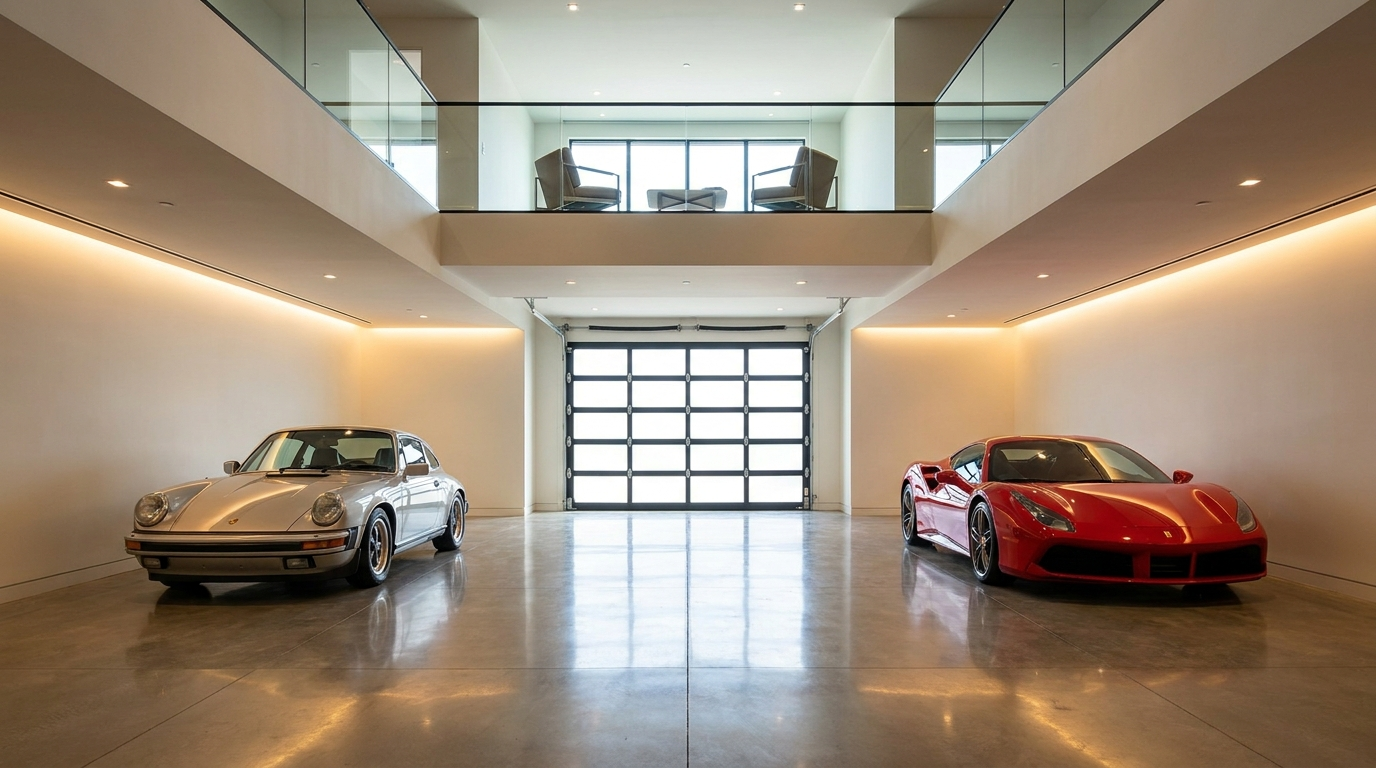
Can you live in a garage condo? No — not full-time. Almost every garage condo in the country sits on commercially or industrially zoned land and carries a certificate of occupancy for storage or commercial use, not habitation. Occasional overnight stays are a separate question, and the answer varies by community.
That distinction is the part almost nobody explains. “You can’t live here” and “you can never spend the night” are two different rules. Most garage condo communities enforce the first strictly and treat the second as a gray area. Knowing where your community draws that line is one of the more practical things a buyer can learn before signing.
In this guide
- Key takeaways
- Why can’t you live in a garage condo?
- Can you sleep overnight in a garage condo?
- What is a motor suite?
- Are there garage condo communities where you can live?
- What can you legally do in a garage condo?
- What happens if you ignore the rule?
- Seven questions to ask before you buy
- Frequently asked questions
Key takeaways
- Full-time residential use is prohibited in virtually every garage condo community.
- The restriction comes from zoning and building code, not just association preference — the HOA cannot waive it.
- Some communities permit casual or intermittent overnight stays; others ban overnight occupancy outright.
- A motor suite describes a finish level, not a residential zoning designation.
- A small number of developments have separately permitted residential or live-work buildings alongside the garage bays.
- Insurance is written against stated use — occupying a garage condo improperly can put a claim at risk.
Why can’t you live in a garage condo?
Three separate layers of rules have to line up before anyone can legally live somewhere. In a garage condo, at least one of them is almost always missing.
Zoning
Garage condo campuses are typically built on commercial or industrial land. Municipalities plan water, sewer, schools, and emergency services around expected residential density, so land zoned for storage and light industrial use is generally not permitted to house people.
This is the layer buyers underestimate most. An association could vote tomorrow to allow residency and it would change nothing, because the restriction sits above the association. Many municipalities state the point directly — Rancho Palos Verdes, California is one of many that spells out that a garage is non-habitable space and cannot be lived in, slept in, or rented as a dwelling.
Certificate of occupancy
Every building carries a certificate of occupancy stating what it was inspected and approved for. A garage condo’s CO covers storage or commercial use, not habitation. Under Section 111 of the International Building Code, a structure cannot be occupied at all until the building official issues a certificate for that specific use, and a change of occupancy requires a new one.
Occupying a garage condo as a home without a residential CO means occupying a structure that was never inspected against the standards that make a residence safe to sleep in.
Building code
Habitable space carries requirements that garage buildings usually do not meet: minimum window sizes for natural light and emergency egress, dedicated kitchen and bathroom plumbing, ventilation, and separation between living areas and spaces where fuel and fumes are present.
A garage condo can have a beautiful kitchenette and a full bathroom and still fall well short of residential code. On top of all three layers sits the association’s own governing documents, which almost always restate the prohibition in plain language.
Can you sleep overnight in a garage condo?
Sometimes. This is where the honest answer diverges from the boilerplate one, and it varies enough between communities that it belongs in your due diligence rather than your assumptions.
Plenty of communities distinguish between using a garage condo as a residence and staying in it occasionally. A common formulation permits casual or intermittent overnight stays by owners and their guests, subject to local ordinances, while making clear the unit is not zoned for residential use and any loft or mezzanine living space must comply with local code.
That is a meaningfully different rule than a blanket ban. It means a long night at the shop, a weekend during an event, or a guest crashing after a track day is generally tolerated. It does not mean you can receive mail there, register it as your legal address, move a family in, or make it your primary home.
Other communities go the other way and prohibit overnight occupancy entirely, drawing the line at short breaks and naps during a work session. Both approaches are common. Neither is the industry standard.
Typical garage condo use rules at a glance
| Use | Typical status |
|---|---|
| Vehicle storage and display | Permitted |
| Working on your own vehicles | Permitted, within noise and safety rules |
| Lounge, office, loft, or entertainment build-out | Permitted |
| Hosting friends, clients, and events | Permitted |
| Leasing your garage condo to a tenant | Usually permitted |
| Occasional overnight stay | Varies by community — ask directly |
| Customer-facing business operations | Often prohibited |
| Full-time residential occupancy | Prohibited |
| Registering the unit as your legal address | Prohibited |
What is a motor suite?
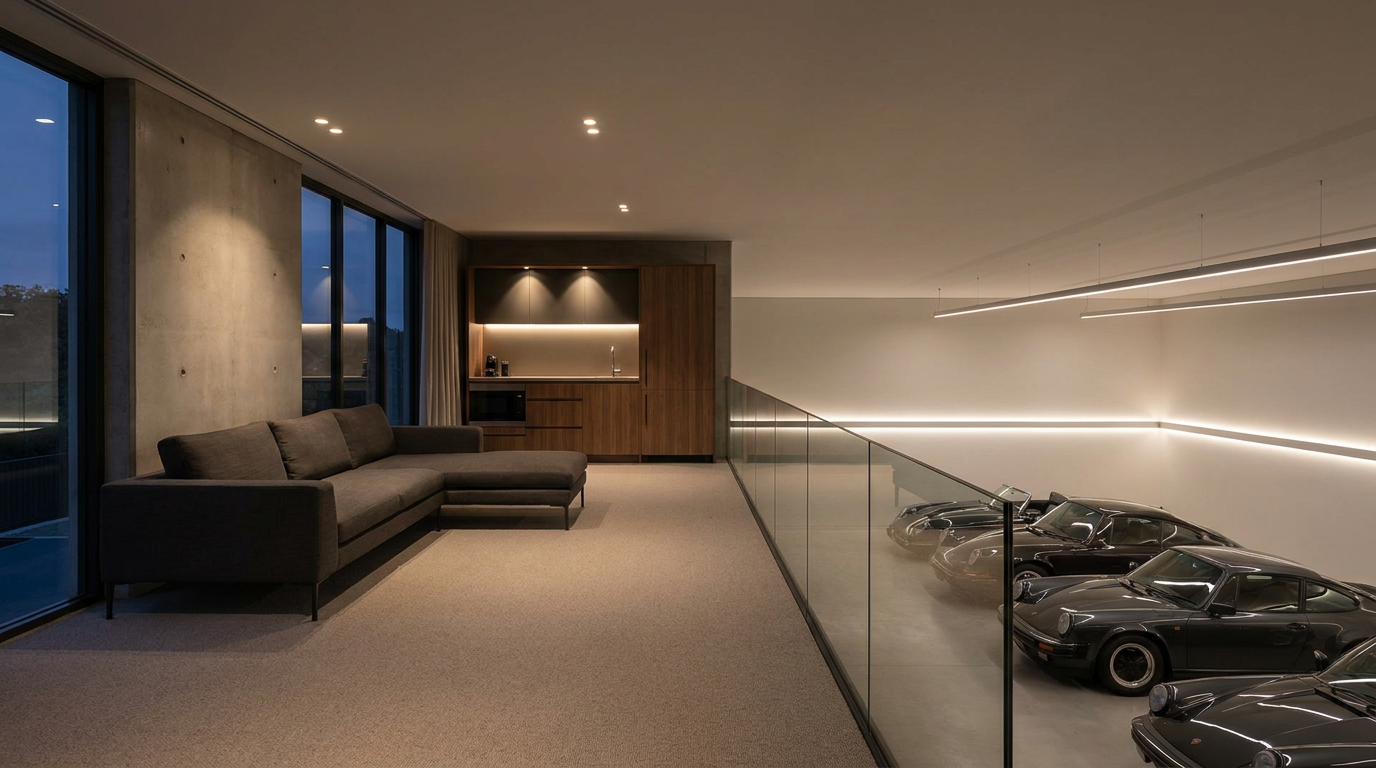
A motor suite is a higher-specification garage condo: a finished second-level loft or mezzanine, upgraded interior build-out, a kitchenette, a full bathroom, HVAC, and often a lounge or viewing area overlooking the cars below. The term describes the finish level and the intended experience.
It does not describe a change in legal status. A motor suite built on commercially zoned land with a commercial certificate of occupancy is still a commercial building. The kitchen does not convert it. The sofa does not convert it. If a listing implies otherwise, that is a question for the developer and the municipality, in writing.
Are there garage condo communities where you can live?
A small number of developments have obtained approvals for genuine residential or mixed-use components, usually by working with the municipality to rezone a specific portion of the property rather than the whole campus.
The pattern is worth understanding. It is rarely the garage bays themselves that become habitable. It is a separately permitted structure — townhomes, condominiums, or purpose-built live-work units — built alongside the garage condo buildings and approved under a different designation. Owners get proximity to their collection without the legal fiction of living in a warehouse.
If a community advertises residential capability, ask which specific units carry it, what the zoning designation is, and whether the residential piece is built and approved or still in entitlement. Those are three different answers, and the last one is not a guarantee.
What can you legally do in a garage condo?
The restriction on living there is narrower than it sounds, and it leaves most of what garage condo buyers actually want intact:
- Store and display vehicles, boats, RVs, and equipment
- Work on your own cars, including lifts, fluid changes, and fabrication within noise and safety rules
- Build out a lounge, office, loft, bar, or entertainment space
- Host friends, clients, and community events
- Use the space as a private office or creative studio, where association rules permit
- Lease your garage condo to another owner or tenant, in most communities
- Come and go on 24-hour access
The typical limitations are equally consistent: no residential occupancy, no exterior modifications without approval, no blocked drive aisles or fire equipment, no activity that meaningfully disturbs neighboring owners, and in many communities, no customer-facing business operated from the unit.
What happens if you ignore the rule?
Two enforcement paths run in parallel, and they are independent of each other.
The municipality can issue zoning and building code violations that accrue daily, and can ultimately order the unit vacated. The association can issue violation notices, levy fines, and place a lien on the garage condo if those fines go unpaid.
There is a quieter risk that matters more to most owners. Insurance is written against the stated use of the property. A claim arising from a unit being occupied in a way its policy and its certificate of occupancy do not contemplate is a claim with a real chance of being denied. For someone storing a collection worth more than the building, that is the exposure to think about.
Seven questions to ask before you buy
Get the answers in writing, from the developer or association, and read them against the actual governing documents rather than the sales brochure.
- What is the zoning designation of this parcel, and what does the certificate of occupancy permit?
- Do the CC&Rs address overnight stays, and where exactly is the line drawn?
- Is the loft or mezzanine permitted as habitable space under local code?
- Are there residential or live-work units on the property, and are they built and approved today?
- Is the garage condo taxed as commercial or residential property, and what does that mean for the annual bill?
- What does the master insurance policy cover, and what is my responsibility for interior build-out?
- Can I lease the unit, and are there restrictions on the tenant or the term?
Frequently asked questions
Can you live in a garage condo full-time?
No. Garage condos are typically built on commercially or industrially zoned land with a certificate of occupancy for storage or commercial use, not habitation. Full-time residential occupancy violates zoning, building code, and association rules simultaneously.
Can you sleep overnight in a garage condo?
It depends on the community. Some permit casual or intermittent overnight stays by owners and their guests, subject to local ordinances. Others prohibit overnight occupancy entirely. Confirm the specific rule in the governing documents before you buy.
What is a motor suite in a garage condo?
A motor suite is a higher-specification garage condo with a finished loft or mezzanine, kitchenette, full bathroom, and lounge space. It describes the finish level, not a residential zoning designation.
Are there garage condo communities where you can live?
A small number have obtained municipal approvals for separate residential or live-work structures alongside the garage buildings, rather than making the garage bays themselves habitable. Ask whether the residential component is built and approved or still in entitlement.
Can you run a business out of a garage condo?
Private and administrative use is commonly permitted, but many associations prohibit customer-facing operations that generate traffic, signage, or retail activity. Rules vary widely, so check the CC&Rs against your intended use.
Is a garage condo taxed as residential property?
Generally no. Because a garage condo sits on commercially or industrially zoned land, it is usually assessed as non-residential property, which often carries a different tax basis than a home.
The bottom line
A garage condo is not a house and was never designed to be one. It is a purpose-built home for the things you own, on land zoned for exactly that. The people who are happiest in these communities are the ones who understood that going in — they bought a place to keep and enjoy a collection, not a way around a residential mortgage.
Where the nuance pays off is in the middle ground. If spending the occasional night matters to you, that is a real question with a real answer, and it varies enough between communities that it is worth asking directly before you fall for a floor plan. Ask early, get it in writing, and buy the community whose rules match the way you actually plan to use the space.
New to the category? Start with our complete buyer’s guide to garage condos for pricing, financing, ownership structures, and what to expect from an association.